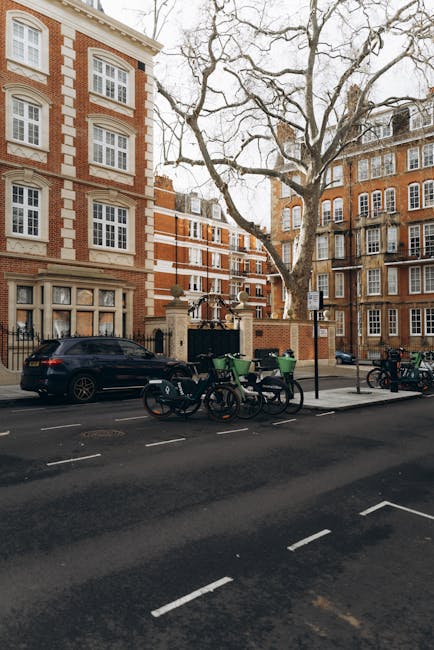
Moving to Berkeley Square, Mayfair: Streets, Access & Tips
Berkeley Square sits at the refined heart of Mayfair, and moving there is less about distance than precision. The streets are narrow, the access can be restrictive, and the building mix ranges from elegant townhouses to high-spec apartments with very particular loading requirements. If you are planning a move into or out of Berkeley Square, you will want more than a standard removals checklist. You need a clear grasp of the local streets, how vehicle access works, and the small decisions that save time, stress, and costly delays.
This guide breaks down the practical side of Moving to Berkeley Square, Mayfair: Streets, Access & Tips so you can plan with confidence. You will find route considerations, access advice, packing priorities, timing tips, and the common mistakes people make when moving in central London. If you need broader local context, it can also help to read about day-to-day life in Mayfair and the quieter corners and character of the area.
Practical summary: Berkeley Square moves tend to go best when you book access early, keep the moving vehicle plan simple, reduce the number of trips, and coordinate timing around building rules and local traffic patterns. In a place like Mayfair, being organised is not a nice-to-have; it is the difference between a smooth arrival and a long, awkward wait outside a controlled street.
Why Moving to Berkeley Square, Mayfair: Streets, Access & Tips Matters
Berkeley Square is not a typical residential street. It is one of those central London locations where the surroundings are polished, but the logistics can be surprisingly unforgiving. That matters because even a well-run move can unravel if the vehicle arrives at the wrong time, the lift booking is missed, or the team has not accounted for narrow access and loading restrictions.
The streets around the square are busy, prestigious, and shared by residents, offices, visitors, hospitality venues, and service traffic. In practical terms, that means your move should be planned with the same care you would give to a high-value delivery. The fewer assumptions you make, the better.
It also matters because Berkeley Square often sits within a wider Mayfair move that involves expensive furniture, delicate items, or tight completion windows. If you are relocating a home, office, or hybrid space, small errors can cascade quickly. A wrong-sized vehicle may not be able to wait. A packing delay may push you into peak traffic. A missing access code can stall the entire job.
For people exploring the wider area before moving, the local property angle can also be useful. Guides such as purchasing property in Mayfair and understanding Mayfair property as an investment help explain why the area attracts such careful, detail-driven moves in the first place.
How Moving to Berkeley Square, Mayfair: Streets, Access & Tips Works
The move itself usually follows a simple outline, but the execution is more delicate than in outer London. First, you identify the exact property access point, not just the postcode. Then you match the move size to the street reality: vehicle size, parking position, walking distance from kerb to door, and whether the building offers a loading bay, concierge support, or service entrance.
Second, you confirm any restrictions that could affect the move. That may include building move-in rules, time windows for lift use, requirements for floor protection, or limitations on where a van can stop. In Mayfair, these details are often more important than the actual mileage from one address to another.
Third, you plan the packing and labelling so the unloading sequence is efficient. If the team has to hunt for essentials, you lose time at the very point when the street access is most valuable. This is why services like packing and boxes in Mayfair are so useful for larger or time-sensitive relocations.
Finally, you time the move to suit both the building and the street environment. Early starts often help. Midday windows can be workable in some cases. Late arrivals are riskier because traffic, restrictions, and fatigue all tend to rise at once. If you need a more flexible schedule, delivery at a time that suits you is worth considering.
What makes access tricky around Berkeley Square?
The answer is usually a combination of limited stopping space, controlled traffic flow, and the simple fact that Mayfair is built for prestige, not for oversized vehicles. Even when a road is technically accessible, it may not be practical for a large van to linger. That is why careful pre-move planning matters more than people expect.
Key Benefits and Practical Advantages
Moving into Berkeley Square can feel demanding, but there are real advantages when the logistics are handled well. The first is efficiency. A well-planned move reduces time spent waiting outside the property, which means less disruption and a lower chance of schedule drift.
The second advantage is protection. High-value properties often contain high-value contents. Better planning lowers the risk of knocks, crushed boxes, scratched floors, or hurried handling. That is especially relevant when dealing with polished wood, marble finishes, artwork, mirrors, or bespoke furniture. If your move includes larger items, a specialist option such as furniture removals in Mayfair can make a noticeable difference.
The third benefit is peace of mind. A move in Berkeley Square should feel controlled, not chaotic. When the access plan is clear and the packing is orderly, the day feels manageable. Truth be told, that calm is worth a lot in a postcode where everything else tends to be expensive.
There is also a strategic benefit if you are moving for work or a long-term stay. A move that goes smoothly lets you settle sooner, which matters in an area where people often arrive with packed diaries and little patience for delays. If you are weighing up service levels, the overview page for removal services in Mayfair is a useful starting point.
Who This Is For and When It Makes Sense
This guide is for anyone relocating to, from, or within Berkeley Square and the surrounding Mayfair streets. That includes private residents, tenants, landlords preparing a property, office occupiers, assistants arranging logistics on behalf of executives, and anyone with fragile or unusually valuable belongings.
It also makes sense if your move is small but awkward. A one-bedroom flat with limited lift access can sometimes be more complex than a larger house with a simpler route. The same goes for moves involving only a few pieces of furniture, if those items are heavy, fragile, or awkwardly shaped.
If you are a student, the area may not be your usual Mayfair destination, but short-term accommodation and staged moves still happen. For that kind of lighter relocation, student removals in Mayfair or man with van services in Mayfair can be more suitable than a full-scale removal package.
It also makes sense if you are under time pressure. Completion day, lease handover, renovation deadlines, and office fit-out schedules all benefit from a service that can adapt quickly. In those situations, same-day removals in Mayfair may be worth exploring if availability allows.
Step-by-Step Guidance
Here is the simplest way to organise a Berkeley Square move without losing your bearings.
- Confirm the exact access point. Do not rely on the postcode alone. Ask where the vehicle should stop, where items should be unloaded, and whether there is a separate service entrance.
- Check building rules early. Some buildings require booking move slots, lift padding, or prior notice for contractors. If possible, get those details in writing.
- Choose the right moving vehicle. A large van may reduce trips, but only if it can actually access the street safely. Sometimes a smaller vehicle with a more flexible manoeuvre is the better call.
- Pack by room and priority. Label boxes clearly and keep a separate essentials kit. This saves time when you arrive and helps the team place items in the right room quickly.
- Protect fragile and valuable items properly. Mirrors, lamps, artwork, and electronics should be wrapped, boxed, and labelled with handling instructions.
- Plan for parking and waiting. Assume you may need a buffer. In central London, the plan should be resilient, not optimistic.
- Confirm timing the day before. Small changes to traffic, access, or completion timing are common. A short check-in avoids preventable confusion.
- Unload in a logical order. Essentials first, large furniture next, decorative items later. That way, the property becomes usable faster.
If you want help with packing before the move, a structured approach through pack your items and wait for collection can simplify the day considerably.
Expert Tips for Better Results
In our experience, the best Mayfair moves are rarely the flashiest. They are the ones where a few practical decisions are made early and followed consistently.
Tip 1: Minimise loose items. Small objects are what slow moves down. They are easy to miss, hard to stack, and likely to create delays when everyone is ready to load.
Tip 2: Keep one person available for decisions. Someone should be reachable at all times on move day. If a key is missing, a lift is reserved, or a route changes, you need instant answers.
Tip 3: Use precise labelling. Not just "kitchen" or "bedroom," but "kitchen glassware," "bedroom linen," or "study cables." The more exact the label, the smoother the unloading.
Tip 4: Protect access before you protect boxes. That sounds backwards, but it is true. A clean route from van to door saves more time than any amount of perfect box stacking.
Tip 5: Think about the first night. Have bedding, toiletries, chargers, and a kettle where you can find them. People often unpack the wrong box first and then regret it at 11 p.m.
If your move involves a more valuable or complex item, such as a grand piano or specialist furniture, tailored services like piano removals in Mayfair are safer than trying to improvise.
Common Mistakes to Avoid
Most moving problems in Berkeley Square are predictable. That is the good news. The bad news is that they are still easy to make.
- Assuming access is straightforward. In Mayfair, "nearby" and "usable" are not the same thing.
- Booking the wrong vehicle size. Too large and you may struggle with access; too small and you create extra trips.
- Ignoring building instructions. Some developments are strict about booking, lift use, and protective materials.
- Packing too late. Last-minute packing creates damaged items and poor loading order.
- Forgetting insurance and safety checks. If something is valuable or awkward, make sure expectations are clear before the move starts.
- Leaving fragile items unmarked. A box that looks ordinary may contain breakables; the team cannot guess.
- Arriving without a plan for the essentials. That is how people end up searching for a toothbrush at midnight.
Some of these mistakes sound small. In a street like Berkeley Square, small mistakes are the ones most likely to cost time.
Tools, Resources and Recommendations
Good moving decisions are easier when you use the right support pages and planning tools. Start with a quote so you can match service level to your actual requirements. A transparent estimate is useful when comparing a straightforward box move with a full household relocation. You can review pricing and quotes to understand what is typically considered when planning a move.
For larger moves, consider whether you need a complete removals team or a lighter van-based solution. Pages such as removals in Mayfair, man and van in Mayfair, and man with a van in Mayfair help you compare the practical differences.
If you are moving furniture that must be dismantled, wrapped, or reassembled, it is often worth pairing the move with a broader service such as house removals in Mayfair or flat removals in Mayfair. For offices, use office removals in Mayfair so the move is handled with business continuity in mind.
Trust and safety matter too. If you want to understand how a provider handles responsibility, check insurance and safety information, plus any guidance on health and safety policy and payment and security. These pages help you assess professionalism before you commit.
And if you simply want to speak to someone before making a plan, a direct enquiry via the contact page is usually the fastest way to clarify access, timing, and service fit.
Law, Compliance, Standards, or Best Practice
Berkeley Square moves are usually governed more by building procedures and standard moving practice than by highly specialised rules, but compliance still matters. In London, you should expect loading, stopping, and parking arrangements to be treated carefully, particularly in central areas where traffic enforcement may be active. Because rules can change and individual streets may have specific restrictions, it is wise to verify the latest local conditions rather than rely on assumptions.
From a best-practice perspective, good movers will normally:
- confirm access and parking details in advance;
- handle goods carefully and use suitable protective materials;
- communicate timings clearly;
- carry appropriate insurance for the work undertaken;
- respect building rules, neighbours, and shared spaces;
- work in a way that reduces risk to people and property.
If your move includes expensive items, sensitive equipment, or a building with strict concierge rules, ask for those details to be documented before moving day. That simple habit helps avoid disputes and confusion later. For readers who value broader company standards, pages such as terms and conditions, privacy policy, and accessibility information can also be useful markers of a well-run operation.
Options, Methods, or Comparison Table
Different move types suit different Berkeley Square scenarios. Here is a simple comparison to help you decide what fits best.
| Move option | Best for | Strengths | Watch-outs |
|---|---|---|---|
| Man and van | Small flats, light loads, short notice moves | Flexible, efficient, usually easier for tight access | Not ideal for large furniture sets or extensive packing |
| Full removals service | Households, larger furniture, complex access | More support, better for heavier and fragile items | Needs more planning and usually more coordination |
| Same-day service | Urgent moves or sudden schedule changes | Fast response, useful under time pressure | Availability can be limited, especially at busy times |
| Specialist removals | Pianos, artwork, oversized or delicate items | Better handling and appropriate equipment | Requires clear item details and careful scheduling |
If you are moving a smaller load and want to keep the process nimble, man and a van in Mayfair may be the right middle ground. If you need something more robust, broader removal services give you more support from start to finish.
Case Study or Real-World Example
Consider a realistic Berkeley Square move: a two-bedroom flat with a lift booking, a few antique pieces, several boxes of books, and a tight afternoon completion. The resident wants to settle quickly, but the property manager has specific move-in instructions. The street outside is busy, and the vehicle cannot remain parked for long.
The smartest approach is to split the move into stages. Fragile and essential items are packed first and clearly labelled. The largest furniture is measured in advance so the movers know what can be handled without delay. The van arrives only after the access point is confirmed. One person stays available to answer questions. The unloading order is planned so bedrooms and essentials are prioritised before decorative pieces.
That kind of move sounds ordinary, but it works because every part is pre-decided. There is no drama, no guessing, and no last-minute panic at the front entrance. To be fair, that is usually the goal in Mayfair: smooth, quiet, and efficient rather than theatrical.
If the move required storage between dates, a temporary solution such as storage in Mayfair could bridge the gap without rushing the unpacking.
Practical Checklist
Use this checklist before moving day so nothing important is missed.
- Confirm the exact property address and access point
- Check building rules for lift use, timings, and protection requirements
- Choose the right vehicle size for the street and the load
- Measure large furniture and doorways in advance
- Pack fragile items with suitable wrapping and clear labels
- Prepare an essentials box for the first 24 hours
- Keep contact details for the moving team to hand
- Allow extra time for traffic, parking, and loading
- Review insurance, payment, and service terms
- Book help early if your dates are fixed or time-sensitive
If you are still finalising the plan, you can also review removal companies in Mayfair to compare service styles and decide what level of support fits your move best.
Conclusion
Moving to Berkeley Square is perfectly manageable when you treat it as a logistics exercise rather than a standard address change. The best results come from accurate access planning, the right vehicle choice, careful packing, and realistic timing. Once those basics are in place, the move becomes much easier to control.
Berkeley Square rewards preparation. It is a polished part of Mayfair, but it is also a practical environment where detail matters. If you plan well, communicate clearly, and choose the right support, your move can be efficient, calm, and far less disruptive than people imagine.
Get a free quote today and see how much you can save.
For tailored help with access, timing, or the right service mix, a quick enquiry through the contact page is the simplest next step.
Frequently Asked Questions
Is Berkeley Square difficult to move into?
It can be, mainly because of central London access, limited stopping space, and the need to coordinate with building rules. With the right planning, though, it is very manageable.
What is the best type of vehicle for a Berkeley Square move?
It depends on the load and the access point. A smaller van can be easier in tight streets, while a larger removal vehicle may reduce trips if access is straightforward enough.
Do I need to book the building lift in advance?
Often yes. Many Mayfair buildings expect advance notice for move-in or move-out use of lifts, hallways, and service routes. Always check with the building or concierge early.
How early should I arrange a move in Mayfair?
As early as possible, especially if you have a fixed completion date or need a specific time window. Good movers and suitable slots can book up quickly.
Can I move large furniture into Berkeley Square easily?
Yes, but it should be planned carefully. Measure the furniture, check access routes, and use a provider experienced in handling heavy or awkward items.
What should I pack separately for move day?
Keep essentials such as chargers, toiletries, documents, medications, and a change of clothes in a separate bag or box you can reach immediately.
Is same-day removal realistic for Berkeley Square?
It can be, if the move is relatively small and the team has availability. For larger or more complex relocations, advance booking is usually the safer option.
What if parking near Berkeley Square is limited?
That is common in central London. The usual solution is to plan the stop location carefully, allow a buffer for loading, and choose a vehicle that can work within the street constraints.
Are there special considerations for office moves near Berkeley Square?
Yes. Office moves often need more precise timing, better coordination with building management, and careful handling of equipment, files, and IT items. A dedicated office removals service is often the better fit.
How do I know if I need full removals or just a man and van?
If you have a modest amount of furniture and boxes, a van-based service may be enough. If you have a full household, fragile items, or more complex access, a fuller removals service is usually better.
Should I use storage during a Berkeley Square move?
Storage can help if your dates do not line up, your refurbishment is unfinished, or you want to stage the move gradually. It is especially useful when access timing is tight.
What should I check before paying a deposit or confirming the booking?
Check the service scope, timings, access assumptions, insurance, payment terms, and cancellation or change conditions. Clear expectations help avoid surprises later.